Composite Bonding
in Glasgow
If you are unhappy with chipped teeth, small gaps, uneven edges or the shape of certain teeth, composite bonding may be an option worth considering.
At Dentistry on the Square, we use tooth coloured composite resin, applied to selected areas of a tooth and shaped by hand, to improve the appearance of your smile. Our composite bonding dentists, Daryl McLay, Andrew McIntyre and Alison Brownlie, will assess your teeth and explain whether bonding is suitable for you.

★★★★★ 4.9 from 1,375 Google reviews · *Pain-Free Promise


What is composite bonding?
Composite bonding uses tooth coloured resin to repair or improve the appearance of teeth. Your dentist applies the material directly to the tooth, shapes it, hardens it with a curing light, then refines and polishes it so the colour and shape complement your surrounding teeth.
Depending on your case, bonding may need little or no removal of natural tooth structure. It is not suitable for every concern, so an assessment is needed to confirm whether it is right for you or whether another treatment would give a better result.
Not sure if bonding is right for you?
Book a complimentary consultation with one of our Smile Advisors. We’ll look at your teeth, talk through what
you’d like to change and explain your options, with no pressure to go ahead.
What can composite bonding treat?
Suitability depends on the size of the area being treated, the condition of the tooth and the forces placed on it when you bite.
Chipped teeth
Small chips, particularly on front teeth, can be rebuilt to restore a more even outline. Cracks or larger damage may need a different restoration.
Small gaps
Resin added to the sides of selected teeth can make small gaps less noticeable. Larger gaps may be better treated with orthodontics.
Uneven edges
The outline of selected teeth can be refined for a more balanced smile, with your bite checked first.
Worn teeth
In selected cases, resin can rebuild lost tooth structure once the cause of the wear, such as grinding or erosion, has been assessed.
Tooth shape
A tooth that looks shorter, narrower or differently shaped can sometimes be refined to suit the rest of your smile.
Localised discolouration
Bonding can sometimes mask small areas of discolouration. If your concern is the overall shade, teeth whitening may be more suitable.
The benefits of
composite bonding
Your dentist will explain the likely benefits, limitations and maintenance requirements before you decide whether to proceed.
- A conservative option
Changes can often be made with little alteration to natural tooth structure. - Changes to tooth shape
Repairs minor chips, refines uneven edges and alters the proportions of selected teeth. - A tooth coloured finish
The shade and shape are chosen to complement your surrounding teeth. - Fewer appointments
Some straightforward cases can be completed in one appointment. - Repair when needed
Bonding can often be repaired or added to if it chips or becomes damaged. - An alternative to other treatments
For some patients, bonding may be considered instead of veneers or crowns.


Nervous about the dentist? You’re in safe hands.
Every treatment at Dentistry on the Square is backed by our *Pain-Free Promise, with a comfort menu
to help you relax from the moment you arrive.
What happens during composite bonding treatment?
A small repair may be completed in one appointment, while bonding several teeth may take longer. Your dentist will explain the likely appointment time at your consultation.
Consultation and assessment
We discuss what you would like to change, check your oral health and bite, and confirm whether bonding is suitable. Photographs or digital scans may be taken.
Planning and shade selection
We agree the proposed shape and colour. If you are considering whitening, discuss it before bonding so the shade can be planned.
Preparing the teeth
The tooth surface is cleaned and prepared so the composite adheres well. Some cases need little or no removal of tooth structure.
Applying and shaping
The resin is built up where needed and shaped carefully to the tooth outline and surrounding teeth.
Hardening and polishing
A curing light hardens the composite, then the shape is refined, your bite checked and the surface polished.
Final checks and aftercare
We check the finished result and explain how to care for your bonded teeth and what to do if they chip.

Meet Our Composite
Bonding Dentists
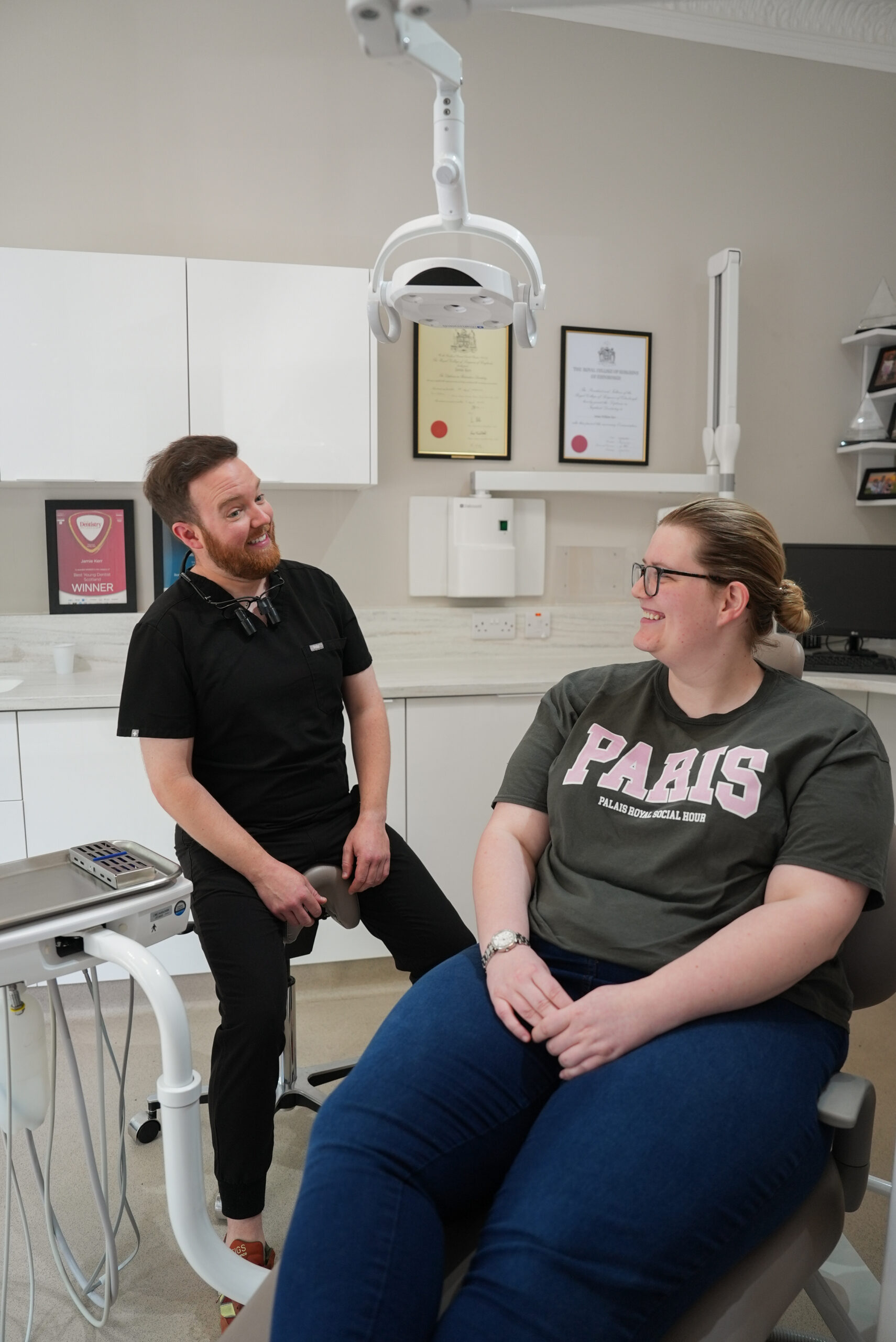
Composite bonding at Dentistry on the Square is carried out by Daryl McLay, Andrew McIntyre and Alison Brownlie. Each has a strong interest in cosmetic dentistry and natural-looking results, and will examine your teeth, discuss your concerns and explain your options, including likely costs and ongoing care, before you make a decision.
Our award-winning team is known across Glasgow for truly *pain-free dentistry. Every treatment is backed by our Pain-Free Promise, and our comfort menu helps you feel relaxed from the moment you sit down. Whether you’re nervous about the dentist or simply want a natural-looking result, you’ll be in caring, experienced hands.
That’s why our patients rate us 4.9 stars from over 1,375 Google reviews.

Daryl McLay
Winner of Best Young Dentist 2023 at the UK Dentistry Awards (Scotland & Northern Ireland), Daryl has a special interest in orthodontics and cosmetic dentistry, with certificates in Cosmetic Dentistry and Aesthetic Restorative Dentistry.
He focuses on creating bespoke, natural-looking smiles in a relaxed, friendly setting.

Andrew McIntyre
Andrew graduated from the University of Glasgow in 2013 and holds a Postgraduate Certificate in Restorative Dentistry from the British Academy of Restorative Dentistry, alongside postgraduate diplomas in orthodontics and clear aligner therapy. He combines minimally invasive techniques with a focus on natural, long-lasting results.
Alison Brownlie
A University of Glasgow graduate and member of the Royal College of Physicians and Surgeons of Glasgow, Alison has a particular interest in cosmetic and aesthetic restorative dentistry and prefers minimally invasive treatment wherever possible. Her experience caring for anxious patients means you’ll be in gentle hands.
How much does composite bonding cost in Glasgow?
The cost depends on the number of teeth treated and the complexity of the work. Repairing a small chip on one tooth is different from reshaping several teeth as part of a wider cosmetic plan.
Before treatment begins, you will receive a clear explanation of the proposed work and costs, including any other treatment needed first.
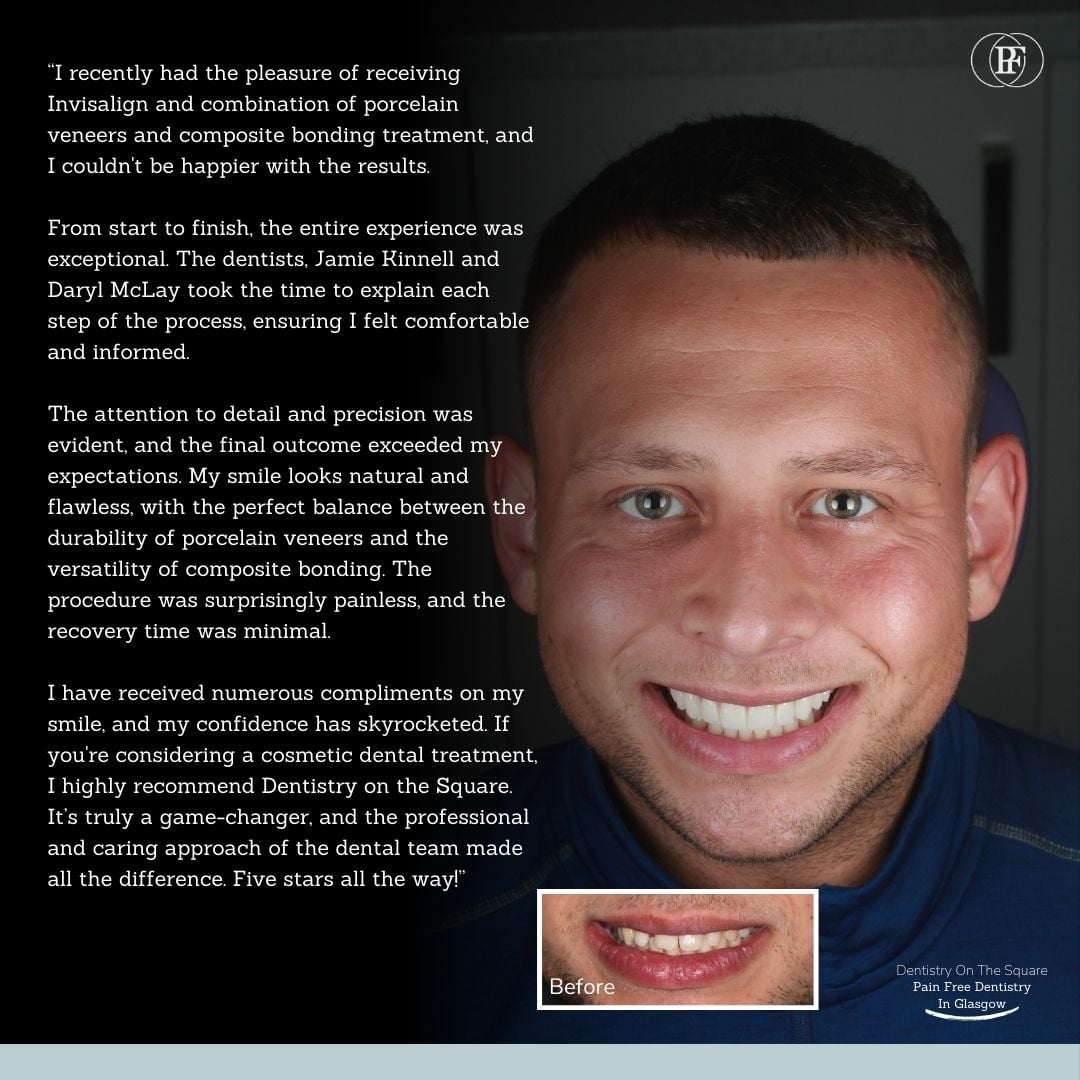
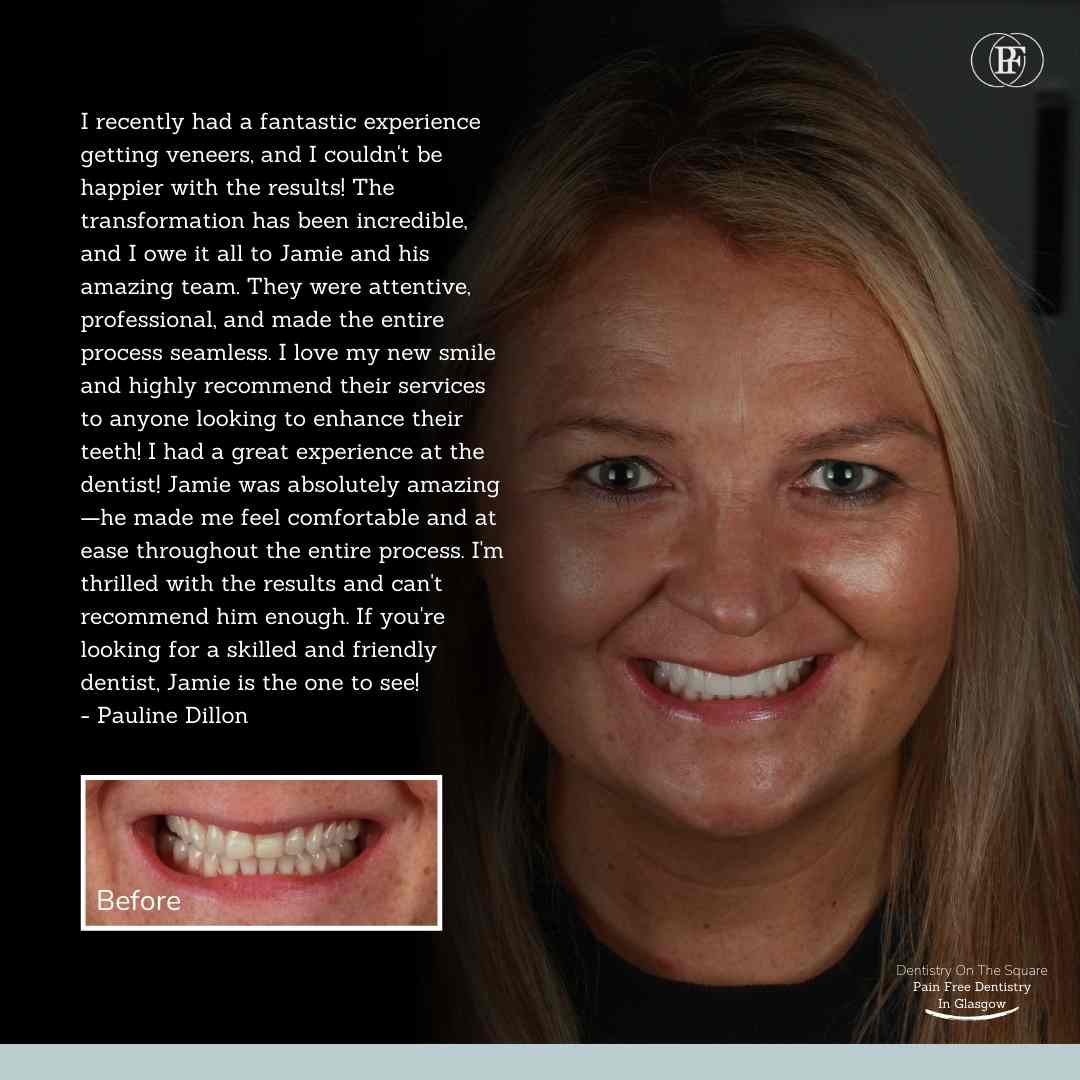
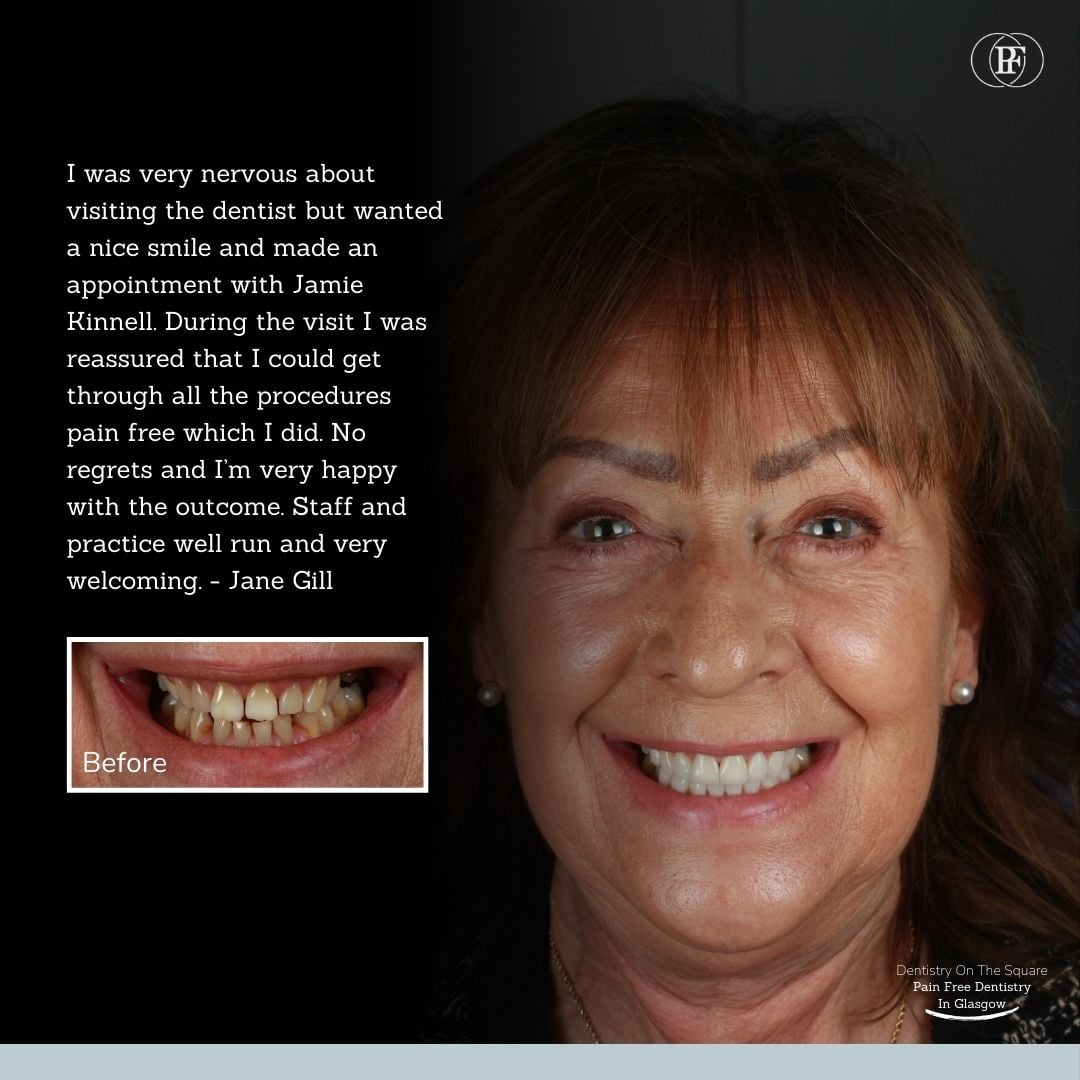
Smiles We’ve Made


Composite bonding videos
Bonding, Composite Veneers Or Porcelain?
Composite Bonding and Teeth Whitening Reveal
Calum Sees His New Smile After Straightening & Composite Bonding
Composite Bonding Smile Reveal at Dentistry on the Square
Ready to talk about your smile?
Rated 4.9 stars from over 1,375 Google reviews. Find out what composite bonding
could do for you at a complimentary consultation.
Composite bonding FAQs
Can’t see your question? Our team is happy to help.
Composite bonding uses tooth coloured resin to repair minor chips, refine tooth shape, improve uneven edges and address selected gaps or areas of localised discolouration. Suitability depends on the condition of the teeth and the changes required.
Most patients feel little or no discomfort, and an injection isn’t always needed. At Dentistry on the Square, every treatment is backed by our *Pain-Free Promise, with a comfort menu to help you relax throughout your appointment.
Composite bonding can often be carried out with minimal preparation, but this depends on the individual case. Some teeth require selective preparation. Your dentist should explain any planned changes to natural tooth structure before treatment begins.
Composite bonding can sometimes reduce small gaps by adding resin to the sides of selected teeth. Larger gaps or more complex alignment concerns may be better addressed with orthodontic treatment or another option.
Bonding can sometimes improve the appearance of minor irregularities by changing the shape of a tooth. It does not move the teeth or correct the underlying position of their roots. Your dentist can explain whether bonding or orthodontic treatment is more suitable.
Whitening products do not change the colour of existing composite resin in the same way they change natural teeth. If you are considering whitening, discuss this with your dentist before bonding so that the shade of the composite can be planned appropriately.
No. Your dentist needs to assess your teeth and gums, your bite, the extent of any damage and your expectations. Other treatments may be more appropriate for significant tooth damage, complex alignment concerns or certain bite problems.
Call 0141 423 8877 or book online to arrange a complimentary consultation. One of our composite bonding dentists will then assess your teeth and explain whether bonding is suitable for you.
Composite bonding isn’t permanent. How long it lasts depends on where it’s placed, your bite, oral hygiene and habits such as nail biting or grinding. Over time it can chip, wear or stain, but it can usually be polished or repaired.
To look after your bonding, brush twice a day, clean between your teeth, keep up regular check-ups and hygiene visits, and avoid biting hard objects. Tea, coffee and smoking can stain composite over time.
Yes. Composite resin can stain or lose its polish over time, and it can chip with heavy biting forces or habits like nail biting. In most cases it can be polished, repaired or added to.
The cost depends on how many teeth are treated and the work involved. You’ll receive a clear plan and price at your consultation before any treatment begins.
Composite bonding is carried out by our dentists Daryl McLay, Andrew McIntyre and Alison Brownlie, who all have a strong interest in cosmetic dentistry and natural-looking results. Every treatment is backed by our *Pain-Free Promise.