Composite Bonding vs Veneers Glasgow: Which Cosmetic Treatment Is Right for You?
Composite bonding and veneers are two of the most requested treatments at Dentistry on the Square, and it is easy to see why. Both can fix chips, close gaps and transform the colour and shape of your smile, which is exactly why so many people researching cosmetic dentistry in Glasgow end up comparing the two and are not sure which one is right for them.
The honest answer is that it depends on what you are trying to fix, how much change you want and how long you want the result to last. This guide breaks down how each treatment works, where they differ and how to work out which one suits your smile, so you can walk into your consultation already knowing the right questions to ask.
What is composite bonding?
Composite bonding uses tooth coloured resin applied directly to your natural tooth. Your dentist etches the surface lightly to help the resin adhere, then builds up, shapes and sculpts the material by hand before curing it hard under a special light and polishing it to a natural finish.
There is no drilling and usually no anaesthetic involved, which makes it one of the least invasive treatments in cosmetic dentistry. Most cases are completed in a single visit, and because so little of the natural tooth is altered, the process is considered minimally invasive. With proper care, composite bonding at Dentistry on the Square can last up to 10 years.
Bonding suits anyone with minor chips, cracks or gaps in their teeth, or who wants to adjust the shape or colour of one or two teeth without a more involved procedure.
What are veneers?
Veneers are thin, custom made shells that cover the front surface of your teeth, and at Dentistry on the Square patients can choose between porcelain and composite options depending on their goals, timescale and budget.
Porcelain veneers are fabricated in a dental laboratory from durable ceramic that closely mirrors the way natural enamel reflects light. They typically last 10 to 15 years or more with good oral hygiene, which is why they are often regarded as the more premium, longer lasting option. Because a thin layer of enamel is usually removed to fit them, porcelain veneers are considered a more permanent commitment.
Composite veneers are sculpted from resin in a similar way to bonding, but are designed to cover the whole visible surface of the tooth rather than repair a specific chip or gap. They usually last 5 to 7 years with proper care and can often be completed in a single appointment, making them a popular choice for patients who want a fuller transformation without the wait for a laboratory made veneer.
For a deeper comparison between the two veneer materials specifically, our dedicated porcelain vs composite veneers guide covers the differences in more detail.
Composite bonding vs veneers Glasgow: the key differences
Both treatments improve the appearance of your teeth, but they go about it in different ways:
- Amount of tooth altered: bonding adds resin to your existing tooth with little to no preparation, while porcelain veneers usually require a small amount of enamel to be removed
- Number of visits: bonding and composite veneers are often completed in one appointment, while porcelain veneers typically need two visits because they are made in a laboratory
- Longevity: bonding lasts up to 10 years, composite veneers around 5 to 7 years, and porcelain veneers around 10 to 15 years or more with good care
- Coverage: bonding is usually used to fix a specific chip, gap or shape issue on one or two teeth, while veneers are generally used to transform the whole smile across several teeth at once
- Reversibility: because bonding removes little or no enamel, it is more reversible than porcelain veneers, where the enamel change is considered permanent
- Cost: bonding is generally the more affordable entry point, with porcelain veneers representing a larger investment reflected in their longevity and laboratory made finish
Which treatment is right for you?
If you have a single chipped tooth, a small gap you would like closed, or a tooth that is a slightly different shape or shade to its neighbours, composite bonding is often the simplest and most cost effective fix. It is also a sensible starting point if you are not ready to commit to a more permanent change.
If you are looking to transform the appearance of several teeth at once, want the most natural, stain resistant and longest lasting result, or have more significant discolouration or wear across your smile, porcelain veneers are usually the better long term investment.
Composite veneers sit in the middle. They give you a fuller smile transformation than bonding alone, often in a single visit, at a lower cost than porcelain, but with a shorter lifespan.
There is no one size fits all answer, which is exactly why every treatment plan at Dentistry on the Square starts with a proper consultation rather than a standard package.
Can you combine bonding, veneers and other treatments?
Many of our patients do not choose just one treatment. It is common to combine composite bonding on the lower teeth with veneers or crowns on the upper teeth, or to pair teeth whitening with bonding so the new work matches a brighter shade throughout. Invisalign is also frequently combined with bonding or veneers, straightening the teeth first and finishing with bonding or veneers to refine their shape.
Patients who want a fast track to a fuller transformation sometimes opt for SmileFast, a streamlined composite veneer system that uses digital photos and records to plan a new smile efficiently. Whatever combination suits your goals, your treatment plan is built around what you actually need rather than a one size fits all package.
Looking after bonding and veneers once they are fitted
Both treatments respond well to the same simple habits, and looking after them properly is what actually determines how close you get to their maximum lifespan.
- Brush twice a day and floss daily, exactly as you would with natural teeth
- Avoid biting hard objects directly with your front teeth, such as ice, pens or fingernails
- Limit staining foods and drinks like coffee, red wine and tea, particularly with composite bonding and composite veneers, which are more prone to staining than porcelain
- Wear a night guard if you grind or clench your teeth, since this can shorten the life of cosmetic treatment
- Keep up regular check ups and hygiene visits so any chips or wear can be caught and repaired early
Composite bonding and composite veneers are also easier to repair than porcelain if something does chip, since your dentist can often add and reshape more resin rather than remake the whole restoration.
A few common myths worth clearing up
Cosmetic dentistry attracts a lot of misinformation, so it is worth separating fact from fiction before your consultation.
The first myth is that veneers always mean permanently filing down healthy teeth. Porcelain veneers usually involve some enamel removal, although the amount depends on the individual case. Composite veneers and bonding generally involve little to no enamel removal.
The second is that composite bonding is a short term fix that will not hold up. In reality, with the right care it can last up to 10 years, and any minor chips that do occur can often be repaired by adding and reshaping more composite.
The third is that cosmetic treatment always means a full smile makeover. Plenty of our patients come in wanting to fix one single tooth, and that is exactly what bonding can be used for. You do not need to commit to a full arch of veneers to see a meaningful improvement.
What does it cost, and how do you get started?
Cost for both bonding and veneers depends on the number of teeth being treated and the complexity of your case, so Dentistry on the Square does not quote a single blanket price. You will receive a clear, personalised quote at your consultation, and payment plans are available to help spread the cost.
Getting started is straightforward. Book a consultation, and the team will assess your teeth, listen to what you want to change and talk honestly about whether bonding, veneers or a combination of the two will get you there.
Why choose Dentistry on the Square
Dentistry on the Square is based at Niddrie Square in Glasgow’s Southside and has built its reputation on comfortable, patient first cosmetic dentistry, backed by over 1,300 five star Google reviews from patients across Glasgow and beyond.
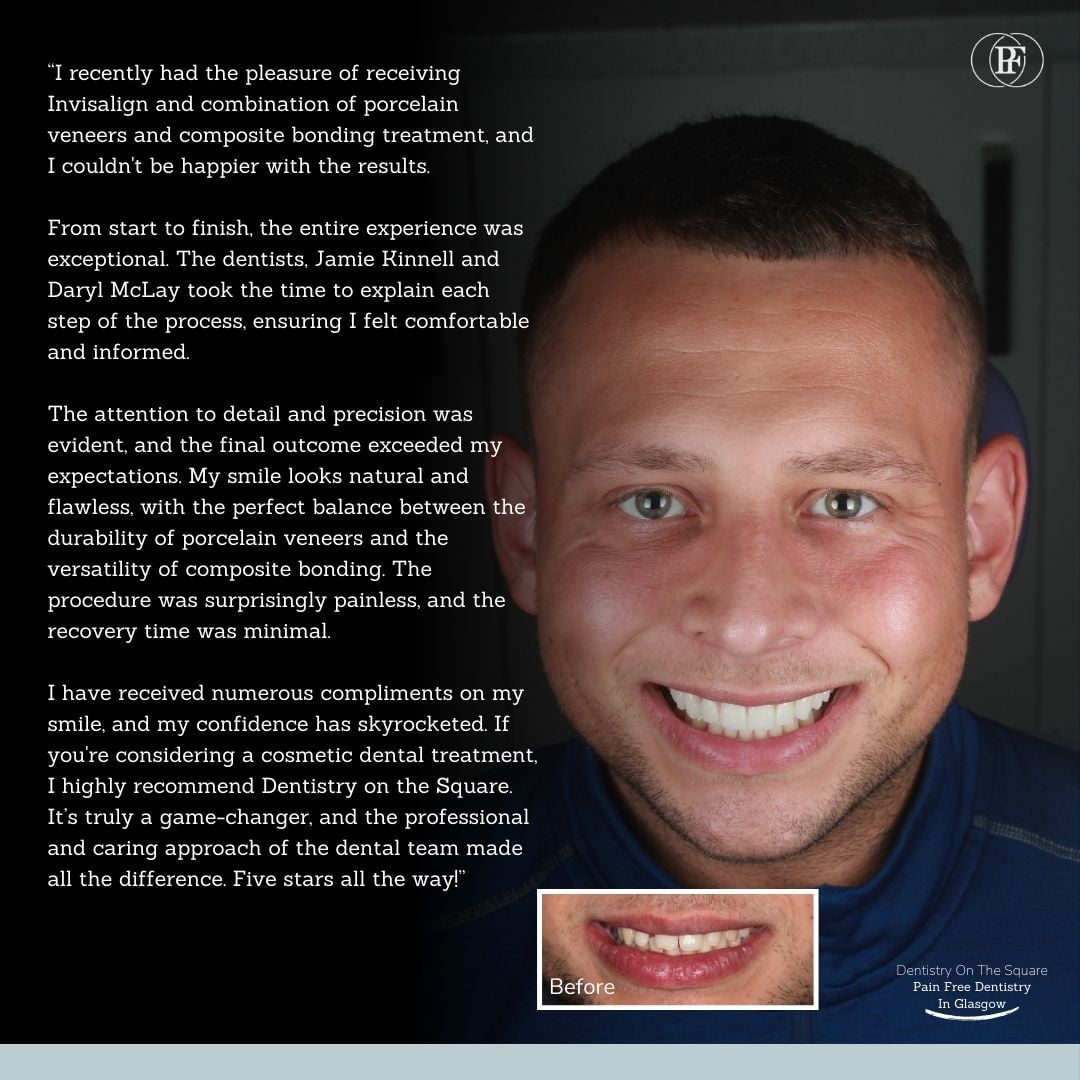
“I got a lot of work done, crowns etc in the back of my mouth, teeth whitening and two composite veneers at the front. My smile is back the way it was and I get so many compliments.”
Dentistry on the Square patient, Google review
“I am so happy with my results of my composite bonding and for giving me the confidence to smile again, thank you.”
Dentistry on the Square patient, Google review
Whichever treatment ends up being right for you, the team takes the time to explain every option clearly so you can make the decision that suits your smile, your timeline and your budget.
Composite bonding and veneers for patients across Glasgow
We welcome patients from across Glasgow and further afield, from the Southside to the wider central belt, all coming to Niddrie Square for cosmetic dentistry that is planned around them rather than a fixed treatment menu.
If you are weighing up composite bonding against veneers, the best next step is a consultation rather than more research. Book your complimentary consultation with Dentistry on the Square and get an honest recommendation tailored to your teeth.
Frequently Asked Questions
Is composite bonding cheaper than veneers?
Generally yes. Composite bonding is usually the more affordable entry point because it uses less material and typically needs only one appointment. Composite veneers sit in the middle, and porcelain veneers represent the larger investment, reflecting their laboratory made finish and longer lifespan. Your exact cost depends on how many teeth are treated, and you will receive a clear, personalised quote at your consultation.
How long does composite bonding last compared to veneers?
With proper care, composite bonding at Dentistry on the Square can last up to 10 years, composite veneers typically last 5 to 7 years, and porcelain veneers typically last 10 to 15 years or more. Lifespan depends a great deal on habits such as biting hard objects, staining foods and drinks, and keeping up regular check ups.
Does composite bonding damage your teeth?
No. Composite bonding is minimally invasive and usually involves no drilling or removal of enamel, so your natural tooth structure stays largely intact underneath the resin. This is one of the main reasons patients choose bonding as a lower commitment alternative to porcelain veneers, which do involve a small amount of enamel removal.
Can I get composite bonding and veneers in the same treatment plan?
Yes. It is common to combine bonding on some teeth with veneers on others, or to pair either treatment with whitening or Invisalign so everything works together as one smile. Your treatment plan at Dentistry on the Square is built around your specific teeth and goals rather than a single standard package.
Which treatment is better for a chipped tooth?
For a single chip or crack, composite bonding is usually the simplest and most cost effective fix, since it can repair the exact area of damage without altering the rest of the tooth. Veneers tend to be a better fit when you are looking to change the appearance of several teeth at once rather than repair one specific area.
Is composite bonding painful?
Composite bonding is usually a comfortable treatment, and most patients do not need any anaesthetic since there is little to no preparation of the tooth involved. It is a minimally invasive treatment that is generally well tolerated by patients.